Skulls Unlimited processes thousands of skulls yearly for hunters, professionals, and educators.
Learn more!
The vampire bat has long been the subject of fear and lore. Found in northern Mexico south to Uruguay, the vampire bat, as its name suggests, feeds...
View full detailsThe reticulated python, native to the rainforests of Southeast Asia, is one of the world's largest snakes. Reaching a length of 25 feet in the wild...
View full detailsRaccoons are probably best known for their black bandit like masks and ringed tail. Raccoons are lively, nocturnal omnivores found from southern Ca...
View full detailsNative to Australia, the platypus is an aquatic mammal that eats a variety of small animals including crayfish, earth worms, frogs, and small fish....
View full detailsThe American bison, also known as the buffalo, once numbered in the millions across North America. The bison was nearly hunted to extinction during...
View full detailsPerfect for building a natural history display or for use in ornithological studies. Eggs are also suitable to be used by rehabilitators for egg we...
View full detailsThe California sea lion is found along the Pacific coast of North America from British Columbia to Mexico. Sea lions are carnivores feeding on vari...
View full detailsThe barn owl is found throughout much of North and South America, Africa, Europe, Australia and southeast Asia. Like most owls, the barn owl has la...
View full detailsSnake skeletons are specialized for their predatory lifestyle, featuring elongated and flexible vertebral columns with numerous ribs supporting the...
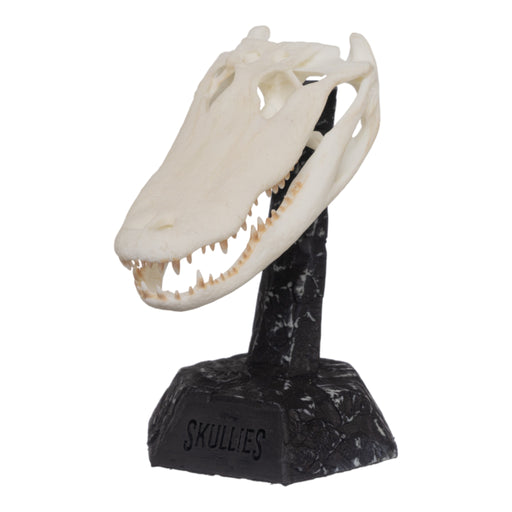
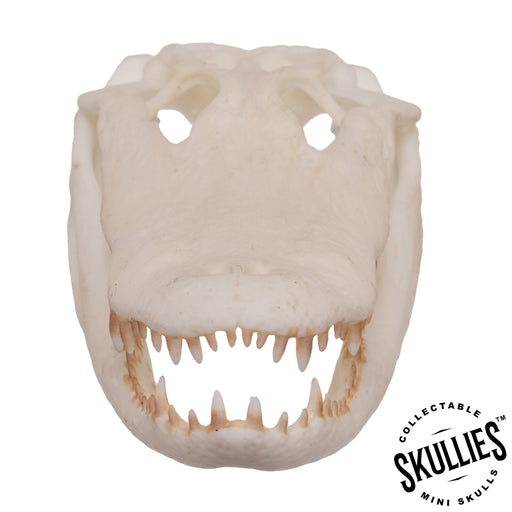
View full detailsIntroducing Skullies: the hottest collection of miniature replica animal skulls, now available through Skulls Unlimited. Every skull is acquired fr...
View full detailsThe American beaver is the largest rodent found in North America. These aquatic herbivores make large dams of wood and mud to flood and create hab...
View full detailsThe star-nosed mole is part of the Talpidae family and can be found in North America, usually in bogs, swamps, and wetlands. This species has water...
View full detailsPreviously only offered individually, Skulls Unlimited now makes these hard-to-obtain specimens available as a set! This set is an excellent aid in...
View full detailsThe modern domestic duck originates from the wild mallard. Believed to have been domesticated as many as 8,000 years ago, the duck has long served ...
View full detailsPerfect for building a natural history display or for use in ornithological studies. Eggs are also suitable to be used by rehabilitators for egg we...
View full detailsThe prairie dog is a vital link in the prairie habitat. Once ranging over much of the United States west of the Mississippi, their numbers have now...
View full detailsPerfect for building a natural history display or for use in ornithological studies. Eggs are also suitable to be used by rehabilitators for egg we...
View full detailsThe koala, native to Australia, primarily feeds on the leaves of the eucalyptus. Despite the koala's appearance, they are not bears. Formerly lumpe...
View full detailsHerrerasaurus (meaning "Herrera's lizard", after the name of the rancher who discovered the first fossil of the animal) was one of the earliest din...
View full detailsPerfect for building a natural history display or for use in ornithological studies. Eggs are also suitable to be used by rehabilitators for egg we...
View full detailsAllosaurus was a large, carnivorous dinosaur that lived during the Late Jurassic period, around 150 million years ago. It walked on two legs, had a...
View full detailsThe African dwarf crocodile is found in streams and swamps of tropical forests in West Africa. This species is the smallest of the crocodilians gro...
View full detailsThe morpho butterflies comprise many species of Neotropical butterfly under the genus Morpho. They are found mostly in South America, Mexico, and...
View full details1.9 MYA. The Homo habilis Skull KNM-ER 1813 was discovered by K. Kimeu in 1973 at Koobi Fora, Kenya, and described by R. Leakey in Nature in 1973. ...
View full details